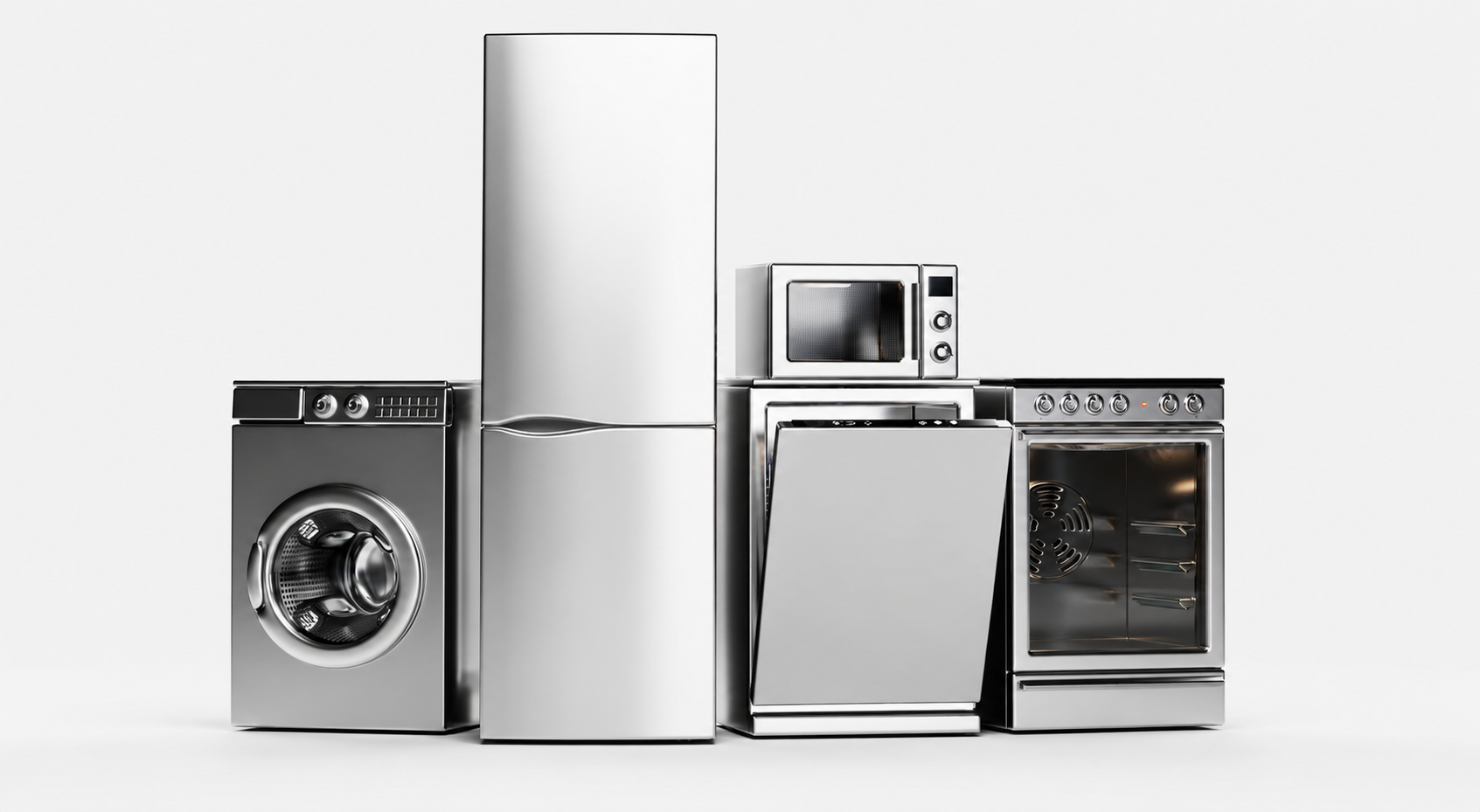
Household appliances are essential investments that make daily life more convenient. While no appliance lasts forever, understanding its expected lifespan can help you plan for maintenance, repairs, and eventual replacement. With proper care, many appliances can continue operating efficiently for years beyond their average life expectancy.
Although every appliance is different, most household appliances have an expected service life when properly maintained.
| Appliance | Average Lifespan |
|---|---|
| Refrigerator | 10–15 Years |
| Washing Machine | 10–13 Years |
| Dryer | 10–13 Years |
| Dishwasher | 9–12 Years |
| Range / Oven | 13–15 Years |
| Microwave | 7–10 Years |
These estimates may vary depending on usage frequency, maintenance, and the quality of the appliance.
Routine maintenance is one of the biggest factors in determining whether an appliance lasts 8 years or 15 years.
Several everyday habits can significantly influence how long your appliances continue operating efficiently.
Cleaning and inspections help prevent unnecessary wear.
Overloading or misuse puts extra strain on components.
Proper installation improves efficiency and reliability.
Humidity, dust, and ventilation all affect performance.
Simple maintenance habits combined with proper operation can dramatically increase appliance lifespan.
As appliances age, they often display warning signs before a complete failure occurs.
If your appliance frequently requires repairs or begins affecting your utility bills, it may be approaching the end of its useful life.
Preventive maintenance costs very little compared to replacing a major household appliance.
| Maintenance Task | Benefit |
|---|---|
| Clean refrigerator coils | Improves cooling efficiency |
| Clean washer and dishwasher filters | Prevents clogs and odors |
| Clean dryer lint filter | Improves safety and drying performance |
| Inspect hoses and seals | Helps prevent leaks |
| Schedule yearly inspections | Detects problems early |
Consistent maintenance reduces stress on components and lowers the likelihood of unexpected breakdowns.
Repairing an appliance is often the most economical solution—but not always.
Replacement may be the better option when:
A professional inspection can help determine whether repairing your appliance will provide several more years of reliable service or whether investing in a replacement is the smarter long-term decision.
Understanding the expected lifespan of your household appliances allows you to plan ahead, reduce unexpected expenses, and make informed repair decisions. Routine maintenance, proper usage, and prompt attention to small problems can significantly extend appliance life. When an older appliance begins showing signs of repeated failure, consulting an experienced technician will help you determine whether repair or replacement offers the best long-term value.